lokigi
Make better, evidence-based decisions about where to locate your healthcare (and other) services
lokigi exists to make the process of providing decision support for healthcare problems with a geographical component easier. Whether you’re planning a whole range of new services, adding a few new sites to an existing set of locations, or making difficult decisions about minimising the impact of service closures, lokigi can help.
Focussing on solving discrete facility location problems — problems where you need to make the best decision from a range of candidate locations — lokigi provides tools to structure your problem, run optimization algorithms, and communicate the results effectively.
Lokigi is currently in an alpha state. We would not recommend using it for projects just yet as the test suite is limited and more validation needs to be undertaken in general.
However, we would welcome your input on the design, usability and features of the project. Please raise issues over on GitHub.
Breaking changes to the API may occur with minor releases prior to v1.0 release.
All breaking changes past v1.0 will incur major version changes.
-
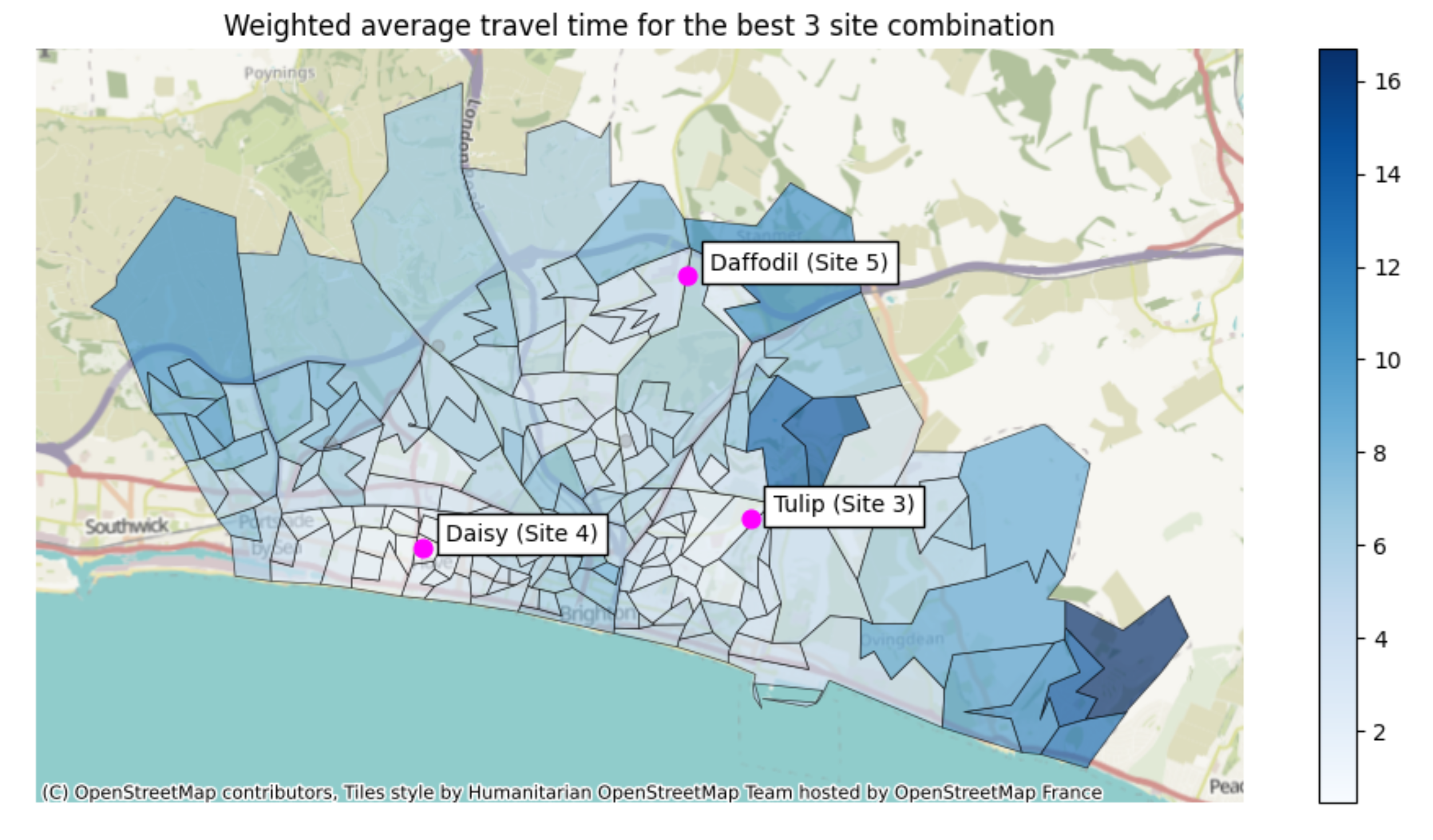
Lokigi supports you in solving location allocation problems. Designed as a beginner-friendly library but powerful and flexible enough for advanced users too, lokigi handles the logic and includes a range of pre-designed outputs to help generate clear, compelling business cases.
-
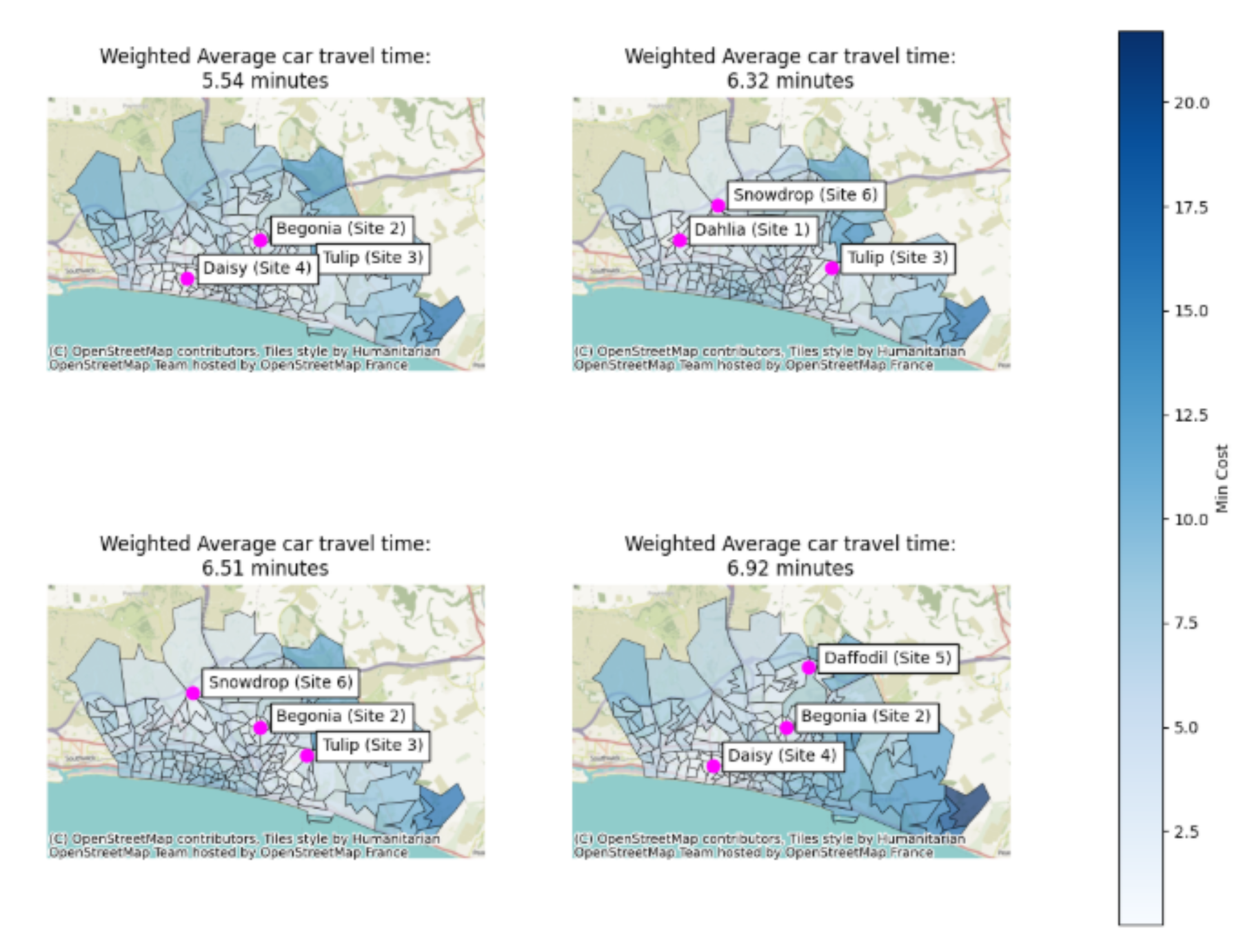
Often just providing a single optimal solution isn't enough. Unlike other libraries, lokigi aims to provide a range of good solutions, allowing decision makers to be presented with a menu of possible options so they can make the best decision when real-world constraints are factored in.
-
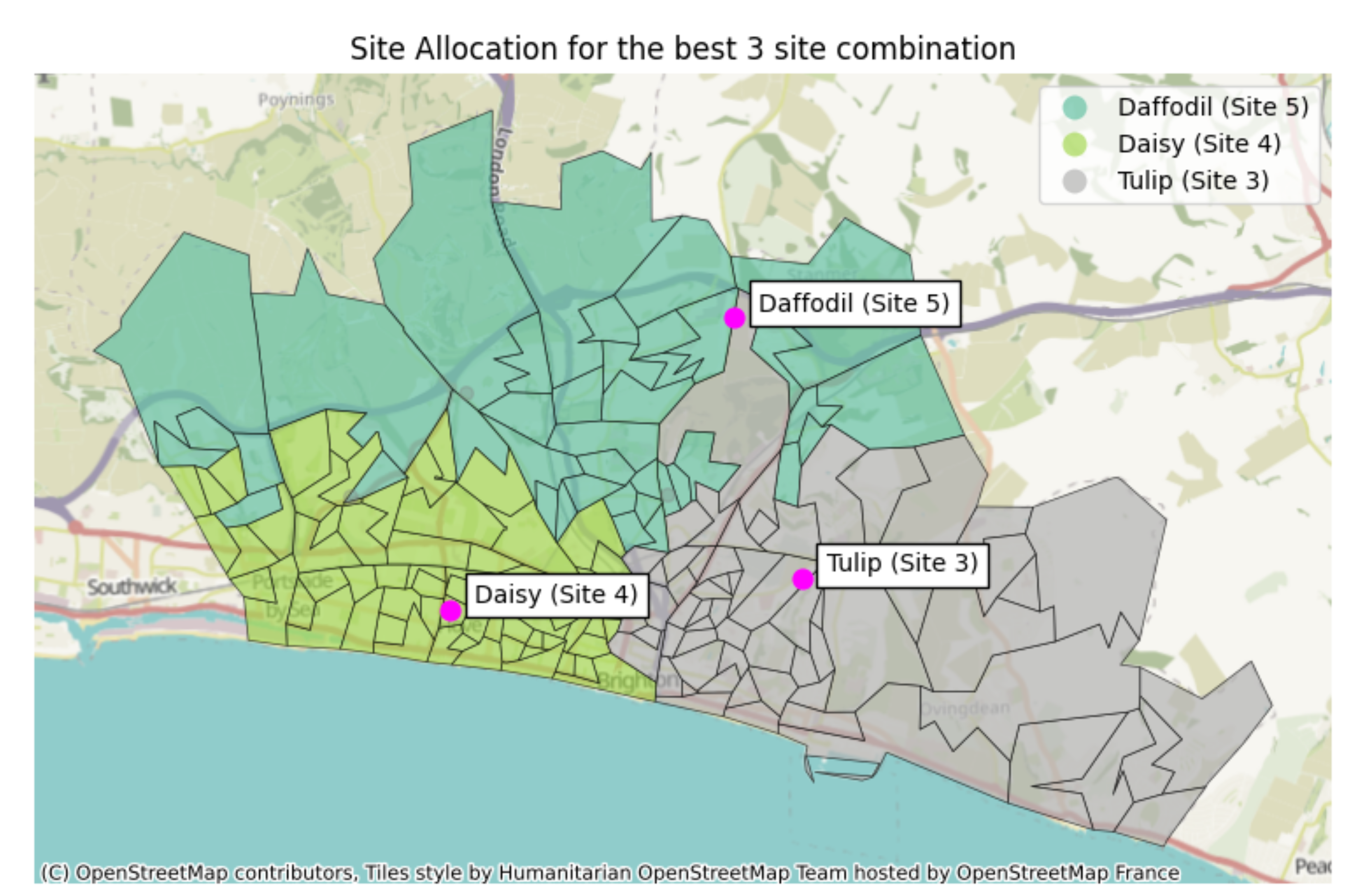
Lokigi's visualisations are designed to meet a range of common needs, such as showing which site a population in a given region is served by, communicating this in ready-to-go but fully customisable maps.
-
Lokigi allows you to solve a range of industry standard problem types, including
• p-median (minimizing average travel time, optionally weighted by a factor like demand)
• p-center (minimizing the maximum travel time for any region)
• and the maximal coverage location problem (maximising the number of people within a certain distance or time of facilities)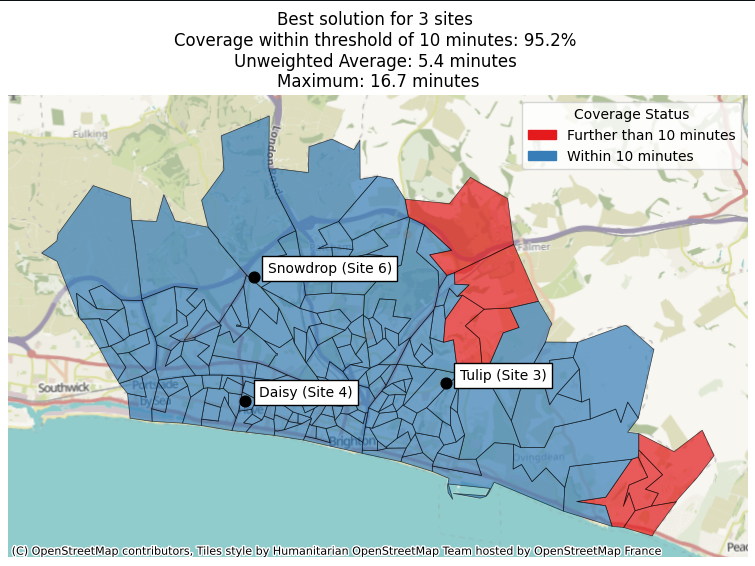
-
Lokigi supports problems both with and without geographic coordinates, with a range of visualisations that allow you to solve problems even when you don't have the data you need to generate maps.
Extensions such as accounting for facility capacity, solving the location set covering problem, and boundary optimization are planned for the future.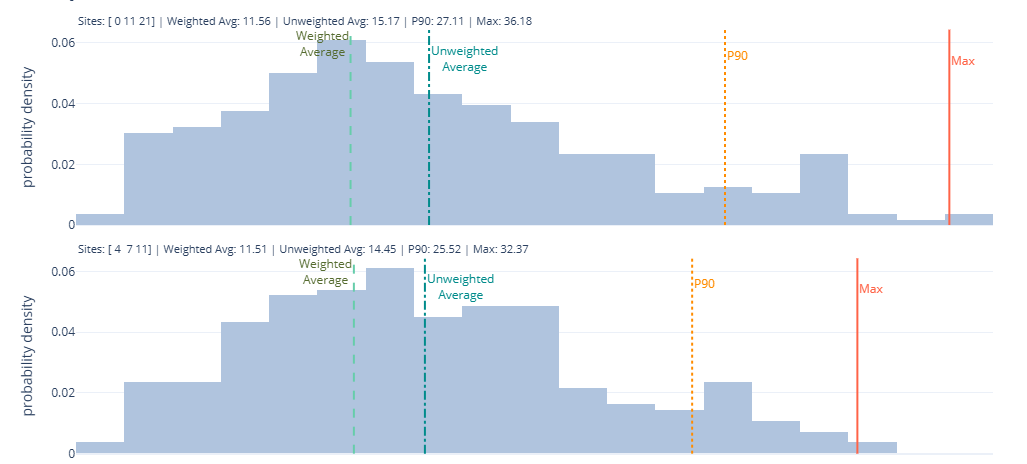
-
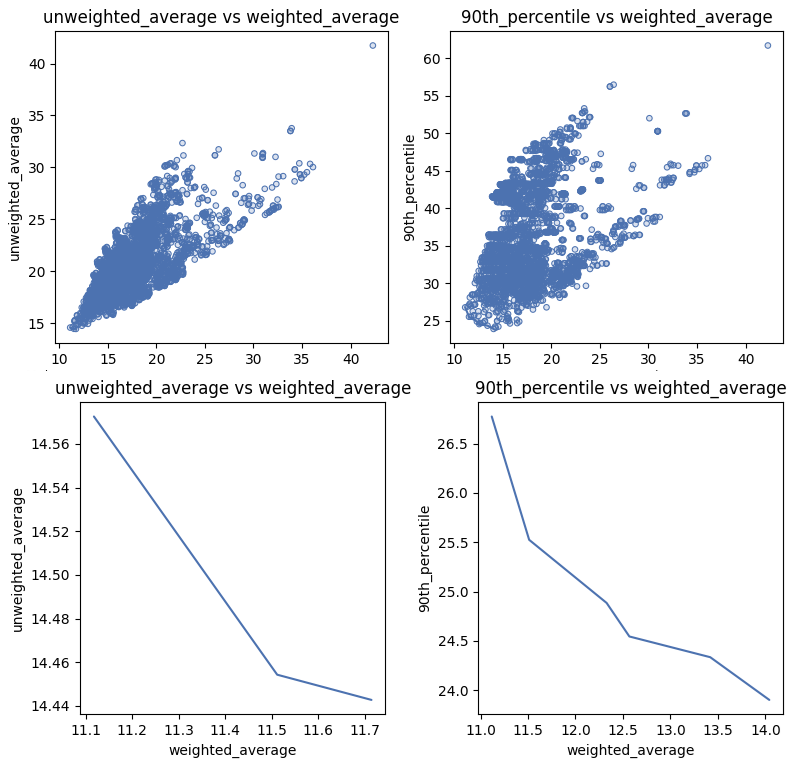
With a range of visualisations aimed at helping you understand the trade-offs between different solutions, lokigi is the ideal tool for helping you make better decisions about locations when faced with competing priorities.
Install with a single command
pip install lokigiWhat does the name mean?
lokigi is the Esperanto  for ‘to locate’ or ‘to place’
It can also be read as the backronym ‘Location Optimisation: K-best solution Inspection, Generation & Insights’ - whichever floats your boat.
How to cite lokigi
Coming soon!
Acknowledgements
Thanks goes to all of the following people (emoji key).
 Sammi Rosser 💻 📖 ⚠️ 🐛 🖋 🎨 💡 🤔 🚇 🚧 📆 🔬 ✅ |
 Tom Monks 💻 🤔 🧑🏫 |
 Dr Daniel Chalk 🧑🏫 |
 Amy Heather 🚇 📖 |
A note about routing
If you dig around in the code enough, you will find some unfinished routing experiments. These have been left in as this is a direction we may pick up again in the future, but they are nowhere near finished and will require significant work to become usable.
For now, SiteProblem is the only supported mode.
Licence
lokigi is released under the MIT licence.
MIT License
Copyright (c) 2026 Sammi Rosser
Permission is hereby granted, free of charge, to any person obtaining a copy of this software and associated documentation files (the “Software”), to deal in the Software without restriction, including without limitation the rights to use, copy, modify, merge, publish, distribute, sublicense, and/or sell copies of the Software, and to permit persons to whom the Software is furnished to do so, subject to the following conditions:
The above copyright notice and this permission notice shall be included in all copies or substantial portions of the Software.
THE SOFTWARE IS PROVIDED “AS IS”, WITHOUT WARRANTY OF ANY KIND, EXPRESS OR IMPLIED, INCLUDING BUT NOT LIMITED TO THE WARRANTIES OF MERCHANTABILITY, FITNESS FOR A PARTICULAR PURPOSE AND NONINFRINGEMENT. IN NO EVENT SHALL THE AUTHORS OR COPYRIGHT HOLDERS BE LIABLE FOR ANY CLAIM, DAMAGES OR OTHER LIABILITY, WHETHER IN AN ACTION OF CONTRACT, TORT OR OTHERWISE, ARISING FROM, OUT OF OR IN CONNECTION WITH THE SOFTWARE OR THE USE OR OTHER DEALINGS IN THE SOFTWARE.
This package builds on work from the metapy project from Dr Tom Monks.
Metapy can be found here.
Metapy is release under the MIT licence. The licence is reproduced below in line with the terms of the licence.
MIT License
Copyright (c) 2020 health-data-science-OR
Permission is hereby granted, free of charge, to any person obtaining a copy of this software and associated documentation files (the “Software”), to deal in the Software without restriction, including without limitation the rights to use, copy, modify, merge, publish, distribute, sublicense, and/or sell copies of the Software, and to permit persons to whom the Software is furnished to do so, subject to the following conditions:
The above copyright notice and this permission notice shall be included in all copies or substantial portions of the Software.
THE SOFTWARE IS PROVIDED “AS IS”, WITHOUT WARRANTY OF ANY KIND, EXPRESS OR IMPLIED, INCLUDING BUT NOT LIMITED TO THE WARRANTIES OF MERCHANTABILITY, FITNESS FOR A PARTICULAR PURPOSE AND NONINFRINGEMENT. IN NO EVENT SHALL THE AUTHORS OR COPYRIGHT HOLDERS BE LIABLE FOR ANY CLAIM, DAMAGES OR OTHER LIABILITY, WHETHER IN AN ACTION OF CONTRACT, TORT OR OTHERWISE, ARISING FROM, OUT OF OR IN CONNECTION WITH THE SOFTWARE OR THE USE OR OTHER DEALINGS IN THE SOFTWARE.
Modified metapy code is noted within the source code.
tests/test_two_step_floating_catchment.py cross-validates two_step_floating_catchment()’s gravity-weighted (distance_decay={"method": "power", ...}) accessibility calculation against the small hospital-accessibility example from the pysal/access project (access/tests/test_hospital_example.py).
pysal/access is released under the BSD 3-Clause licence. The licence is reproduced below in line with the terms of the licence.
BSD 3-Clause License
Copyright 2018 pysal-access developers
Redistribution and use in source and binary forms, with or without modification, are permitted provided that the following conditions are met:
Redistributions of source code must retain the above copyright notice, this list of conditions and the following disclaimer.
Redistributions in binary form must reproduce the above copyright notice, this list of conditions and the following disclaimer in the documentation and/or other materials provided with the distribution.
Neither the name of the copyright holder nor the names of its contributors may be used to endorse or promote products derived from this software without specific prior written permission.
THIS SOFTWARE IS PROVIDED BY THE COPYRIGHT HOLDERS AND CONTRIBUTORS “AS IS” AND ANY EXPRESS OR IMPLIED WARRANTIES, INCLUDING, BUT NOT LIMITED TO, THE IMPLIED WARRANTIES OF MERCHANTABILITY AND FITNESS FOR A PARTICULAR PURPOSE ARE DISCLAIMED. IN NO EVENT SHALL THE COPYRIGHT HOLDER OR CONTRIBUTORS BE LIABLE FOR ANY DIRECT, INDIRECT, INCIDENTAL, SPECIAL, EXEMPLARY, OR CONSEQUENTIAL DAMAGES (INCLUDING, BUT NOT LIMITED TO, PROCUREMENT OF SUBSTITUTE GOODS OR SERVICES; LOSS OF USE, DATA, OR PROFITS; OR BUSINESS INTERRUPTION) HOWEVER CAUSED AND ON ANY THEORY OF LIABILITY, WHETHER IN CONTRACT, STRICT LIABILITY, OR TORT (INCLUDING NEGLIGENCE OR OTHERWISE) ARISING IN ANY WAY OUT OF THE USE OF THIS SOFTWARE, EVEN IF ADVISED OF THE POSSIBILITY OF SUCH DAMAGE.
Extent of reuse. No pysal/access source code is included in lokigi – test_two_step_floating_catchment.py contains only new lokigi test code that builds a SiteProblem via lokigi’s own API. What is reused from pysal/access is:
- Their small example dataset: three locations with specific population, doctor-count and travel-cost values, taken directly from
test_hospital_example.py’s four cost-matrix scenarios. - The resulting expected accessibility values, computed by independently running pysal/access’s own
simple_2sfcareference function (also defined intest_hospital_example.py, not copied into lokigi) over each scenario – not copied from any lokigi output.
This lets lokigi’s generalised weight-matrix engine be checked against a real, independently maintained implementation’s numbers, rather than only lokigi’s own hand-derived arithmetic.